
 Skip to content
Trenchless technology enabling Horizontal Drilling underground, with the ability to steer to avoid obstacles in the ground.
EPS Trenchless Installations advocates this revolutionary approach, offering a range of innovative solutions that remove the need for disruptive excavations. By leveraging state-of-the-art techniques such as Moling and Directional Drilling, EPS Trenchless Installations delivers efficient and cost-effective alternatives for laying and repairing underground utilities.
Trenchless technology enabling Horizontal Drilling underground, with the ability to steer to avoid obstacles in the ground.
Directional Drilling is a technique for installing utilities such as Water pipes, Electric Cables and Gas pipes underground along distances up to 250 metres. State of the art Directional Drilling equipment can be steered deeper underground or around obstructions blocking its path.
This removes the need to dig long, unsightly, messy trenches to lay pipes and cables. Directional Drilling creates neat accurate bore holes under the ground, which utilities can be pulled back through.
The whole process is fast, cost effective, and kind to the environment, with minimal surface damage.


dependent on the required diameter and the ground conditions
(subject to pipe size and ground conditions)
ground dependent
Select your installation type and pinpoint your exact start and end locations on our interactive map to get started!
Essex in the southeastern part of England is known for its history, diverse landscapes, and close proximity to London. It is bordered by Suffolk to the north, Cambridgeshire to the northwest, Hertfordshire to the west, and Kent to the south, across the Thames Estuary. The county has a long coastline along the North Sea, with many picturesque seaside towns such as Southend-on-Sea and Clacton-on-Sea. Essex has a rich historical heritage, dating back to ancient times. It was one of the kingdoms of Anglo-Saxon England and later became an important part of the Kingdom of England. The name “Essex” comes from “East Saxons,” referring to the Saxons who settled in the eastern part of the country.
Essex has strong sectors in services, manufacturing, agriculture, and technology. The proximity to London makes Essex a central location for commuters working in the capital. Retail and tourism are also important to the local economy, with popular destinations such as Southend-on-Sea attracting visitors for its beaches and entertainment. Essex benefits from excellent transport links, including major roads like the M25, and the M11, which connects Essex to Cambridge and the north. There are several rail links into London, with stations such as Essex, Colchester, and Brentwood being popular commuter hotspots.
Construction in Essex plays a key role in the region’s economy and development, with a range of projects spanning residential, commercial, and infrastructure sectors. The construction industry in Essex is supported by its proximity to London, a growing population, and significant investments in infrastructure and regeneration. Here are some key points about construction in Essex:
Essex has seen substantial residential development due to its proximity to London and increasing demand for housing. Many people choose to live in Essex because of its relatively more affordable housing compared to the capital. Areas like Essex, Colchester, and Basildon have seen major new housing developments, with a focus on building new homes, including large-scale housing estates, apartment complexes, and mixed-use developments. Essex has been involved in a number of regeneration projects to rejuvenate former industrial or underdeveloped areas. For example, Southend-on-Sea and Basildon have experienced regeneration with new residential buildings and commercial spaces.
The county has also seen significant retail development with large shopping centres and retail parks, particularly in towns like Essex, Basildon, and Colchester. These areas attract both regional shoppers and those commuting from London. Essex is home to growing office spaces catering to businesses that want proximity to London without the high costs. Towns such as Brentwood, Colchester, and Basildon have seen development of modern office complexes.
The region’s transport infrastructure is crucial for economic growth. Construction projects related to road and rail networks are ongoing to accommodate the growing population. The M25, M11, A12, and A13 are key motorways running through Essex, and there have been ongoing improvements to roads, including road widening, junction upgrades, and new bypasses to ease congestion. Essex is well connected by rail to London, with ongoing upgrades to train stations and lines, such as the Crossrail project (the Elizabeth Line), which extends into Essex, enhancing rail access to central London.
When considering directional drilling in Essex, ground conditions play a crucial role in determining the feasibility, cost, and method of drilling. Essex has varied geology, which influences the ground conditions, and the drilling techniques required. Essex has a diverse geological makeup, which can vary significantly depending on the location. London Clay is one of the most prominent formations in Essex, especially in the central and southern parts of the county. London Clay is typically soft to firm, making it relatively easy to drill through but can be challenging due to its cohesion.. In parts of Essex, especially near river valleys (e.g., around the Thames Estuary and Colchester), the ground can consist of sands and gravels. These materials tend to be loose and may pose challenges in maintaining borehole stability, particularly in shallow sections. However, they can be easier to drill through compared to clay when the right techniques are employed.
In the northern and western parts of Essex, such as near the Colne Valley and the borders with Hertfordshire, the ground may contain harder limestone or chalk layers. These types of formations are harder to drill through and may require specialised equipment. Essex, particularly along the coast and in river valleys, can have a relatively high water table. This is especially true in areas like the Thames Estuary and the northern parts of the county, where groundwater levels can affect drilling operations. When drilling through saturated layers, there is a risk of groundwater ingress into the borehole, which can cause difficulties with drilling fluids or even lead to borehole collapse.
Several factors specific to Essex’s ground conditions can complicate directional drilling operations. While soft layers like clay are easier to penetrate, they may cause problems with directional control, as they can lead to the borehole deviating more than expected. Areas with harder rock formations, such as chalk, limestone, or fractured rock, can increase the cost and difficulty of directional drilling. More specialized tools and techniques may be required. In Essex, directional drilling can be used for shallow utility installations (such as for gas, water, and telecom lines) and deeper boreholes. Both types of drilling face unique challenges based on ground conditions, such as maintaining borehole stability and ensuring precise directional control.
Understanding these conditions is critical for selecting the appropriate drilling methods and ensuring the success of the project. Careful planning, use of appropriate drilling fluids, and consideration of groundwater and aquifer protection are essential elements for effective and safe directional drilling operations in Essex.
Select your installation type and pinpoint your exact start and end locations on our interactive map to get started!
We start with conducting a detailed survey, a site visit, and the use of online technology to check geological information
From conception to completion, EPS will work in partnership with you, planning and advising you on the best way to complete your project
The directional drilling process is handled professionally and meticulously by our fully qualified engineers from start to finish
We leave your site clean and clear of all materials and debris, providing an end-to-end service and complete reinstatement and site clearance.
EPS provide underground utility installation that is fast, efficient and environmentally friendly.
Using Moling and Directional Drilling technology, our streamlined process requires minimal space which avoids unnecessary disruption and inconvenience.
There is no need for extensive surface cutting or digging long trenches. ‘No-dig’ techniques are very adaptable to various soil conditions and protected locations.
This technique provides accurate utility installation, which also protects wildlife and any ecologically sensitive locations. It is an incredibly cost-effective method of replacing old utility systems or installing new utilities.
Minimising the ecological footprint and damage to the environment is an essential when installing utilities and services underground. We integrate environmentally friendly practices into every aspect of our directional drilling process. From careful planning to efficient execution, we endeavour to minimise disturbance to natural habitats and reduce emissions.
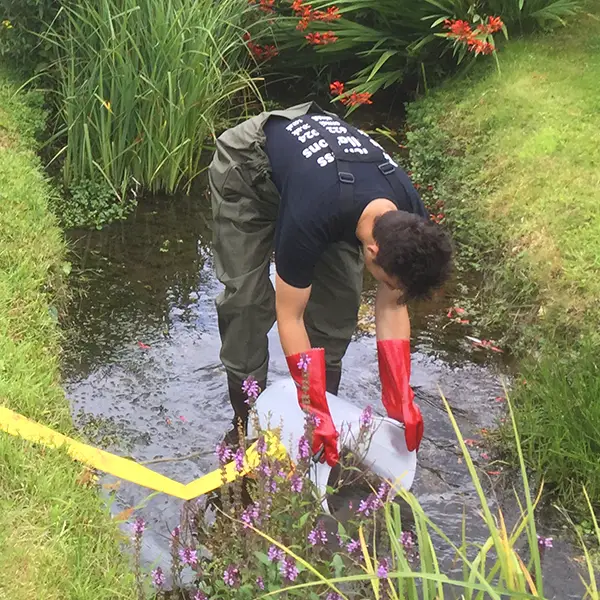
Sites of Special Scientific Interest (SSSI):
Protected areas contain unique ecosystems, rare species and geological formations or habitats and are often protected by law.
The use of trenchless technology is a non-invasive approach which ensures the protection of areas of special conservation interest.
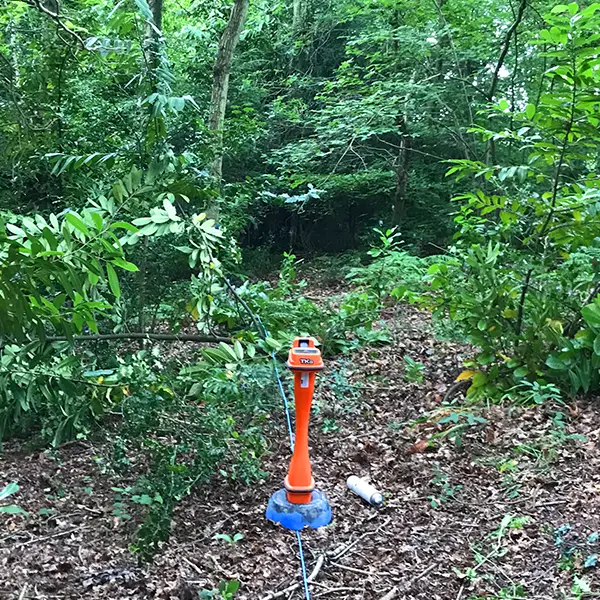
ROOT PROTECTION ZONES (RPZ):
Cutting or damaging tree roots threatens the health and stability of trees, potentially resulting in decline or even death. HDD drilling provides a non-invasive approach that is carefully planned to define a precise path that avoids tree roots. This significantly reduces the risk of root damage in these specialised zones.
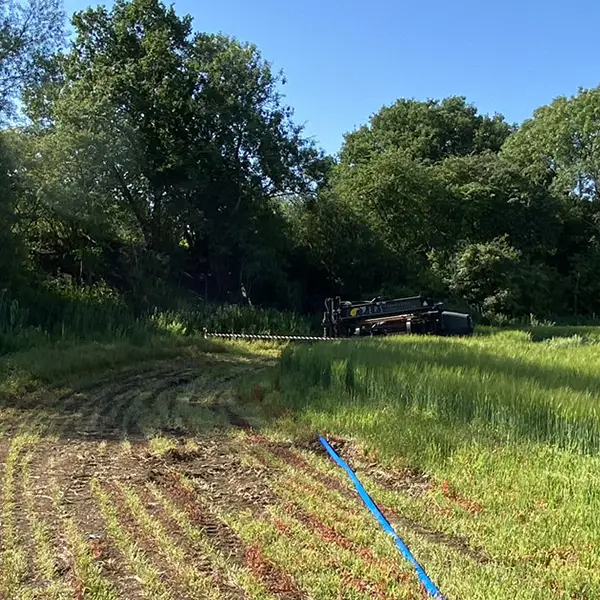
ANCIENT WOODLANDS:
This type of conservation area provides a specialist approach, and directional drilling provides the ability to accurately determine subterranean trajectories, allowing successful installation without affecting the ground cover, damaging tree roots, or disturbing habitats.
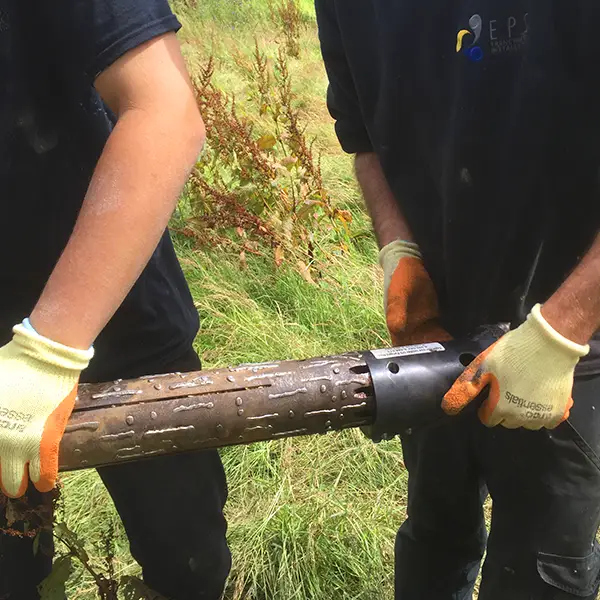
CARBON FOOTPRINT:
Reducing our carbon footprint is at the forefront of our operations. Traditional excavation often involves extensive earth removal and high fuel usage due to heavy equipment and machinery. However, our No-Dig techniques use far less machinery and provide minimal disruption to the environment. This in turn reduce our environmental impact.
Horizontal directional drilling, often referred to as HDD or trenchless technology, is an innovative technique for laying underground utilities such as pipes, cables, ducts, and conduits without resorting to conventional trenching. Instead of creating open trenches, this method starts with a pilot hole that is drilled diagonally from the surface toward a desired endpoint. After the initial hole is made, advanced drilling equipment enlarges and steers the hole in the desired direction while underground. This seamless process provides minimal damage to the surface ground and is not as invasive as conventional methods, saving our clients money and the hassle of restoring the area after large excavation work.
Our procedure starts by drilling a pilot borehole that follows a predetermined route. We then expand the hole along the trajectory established by the pilot bore, a process referred to as back reaming. Finally, the product pipe is pulled through the enlarged passage.
The machine we will choose for your project is dependent on your site and location. For our smaller and more fragile ecological sites, we will select our smaller HDD machine to ensure that we minimise disruption to the environment and protect delicate ecosystems. This smaller HDD machine is designed to navigate tight spaces and sensitive terrain with precision and care, allowing us to complete the job while minimising impact on the surrounding area.
For larger sites that require greater power and capacity, we have larger HDD machines equipped to handle more demanding projects, whilst still maintaining little impact at your location. These machines are capable of tackling larger bore diameters and longer distances, providing the necessary strength and efficiency to complete the job effectively.
No matter the size or complexity of your project, we have the expertise and equipment to ensure successful horizontal directional drilling while prioritising environmental conservation and minimising disruption to sensitive areas.
Directional drilling is utilised for laying utility lines and conduits, providing a more economical and minimally invasive option compared to conventional vertical drilling methods.
This approach provides many advantages over conventional drilling as it is possible to lay or repair utility pipes, ducts, or cables, without excavations of large amounts of ground and provides options for laying pipes in sensitive or protected areas.
There are many advantages to employing horizontal and directional drilling. These are, minimal disturbances to surfaces, reduced environmental impact, cost savings, enhanced safety, and provides minimal disruption to utilities.
This is entirely dependent on the machine used for your location and ground conditions and/or obstructions. We will conduct a site visit and discuss the plan of action. Pipes from 25mm to 355mm diameters can be installed over distances of up to 200 metres in a single shot. Ducting, cables, and pipework can also be installed in either straight or curved lines.
No, it won’t. Our methods and trenchless technology will minimise disturbance in your location. Our approach ensures that we can carry out our work efficiently and effectively while keeping the impact on your surroundings to an absolute minimum. We will conduct a site visit before work takes place, talk through your requirements and we will evaluate the area to identify any obstacles or obstructions that may be present.
If you require work in protected or specialist areas, we can provide minimal disruption to the natural environment, ensure compliance with any relevant regulations or restrictions, and respect the integrity of the site.
We provide many trenchless solutions such as guided auger boring, moling, pipe bursting, pipe ramming, small footprint drilling, s50works, and fire hydrant testing.
We provide our expert trenchless solutions across a span of industries in the UK. Our industries include environmental remediation, water management, utility services, civil engineering and construction, and more.